
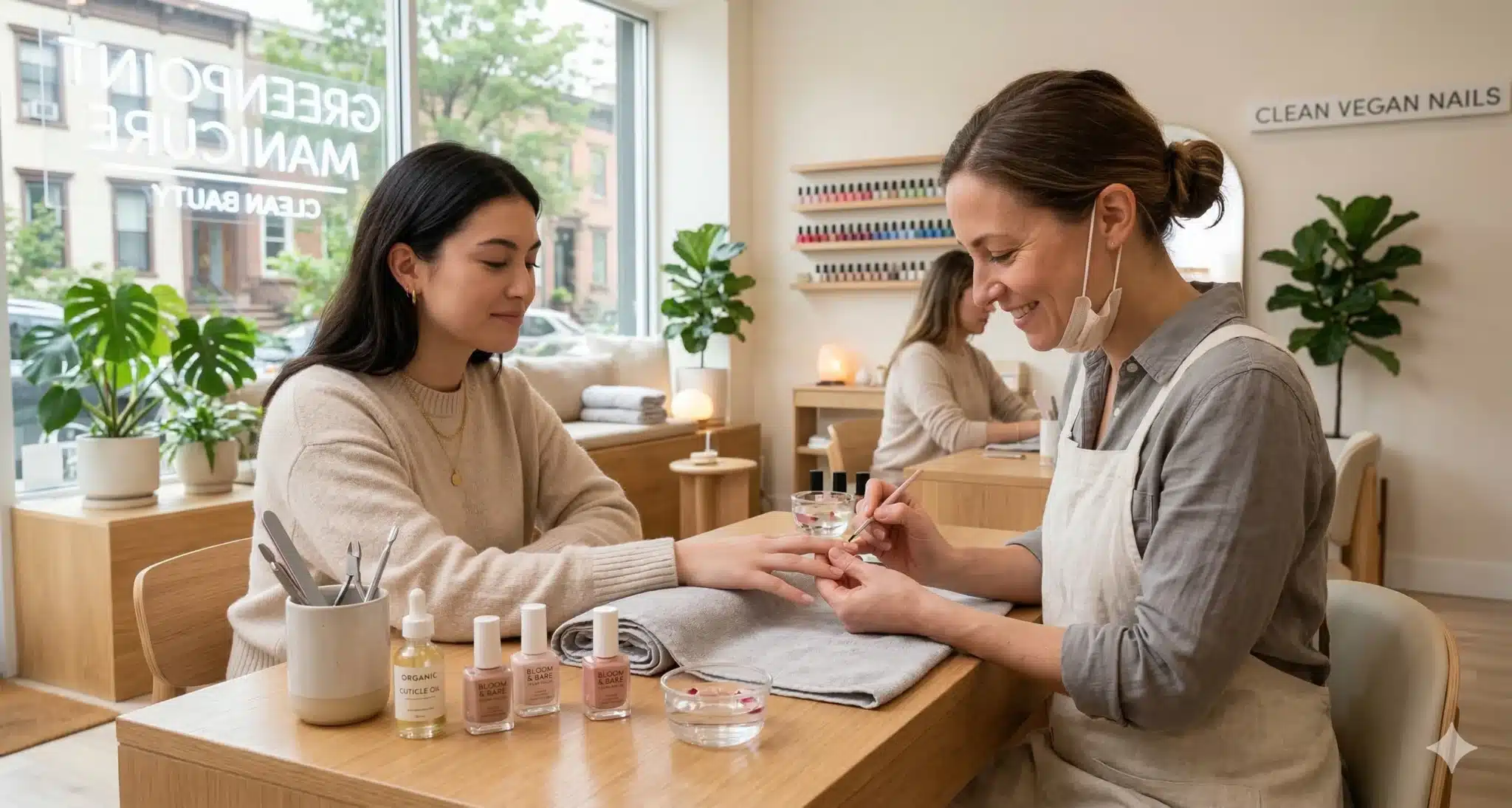
A regular manicure should be a restorative experience, not an exposure concern. But the standard nail salon environment has historically involved chemicals that the Occupational Safety and Health Administration (OSHA) classifies as occupational hazards — including formaldehyde, toluene, and methacrylate compounds.
If you are looking for a genuinely safer salon experience, knowing what to look for — and what questions to ask — makes a real difference.
What “Non-Toxic” Actually Means in a Nail Salon Context
The term non-toxic is not legally regulated in the nail industry. Any salon can call itself non-toxic without meeting a formal standard. What actually matters is the specific chemicals in the products being used.
The most significant hazards in conventional nail salons are formaldehyde and formaldehyde resin (known human carcinogens), toluene (an EPA-classified hazardous air pollutant), dibutyl phthalate (a suspected endocrine disruptor banned in EU nail products), and MMA (methyl methacrylate, prohibited by the FDA but still found in some discount salons).
A genuinely non-toxic salon will be transparent about which product lines they use. Look for 10-free nail polish as a minimum baseline.
5 Signs of a Genuinely Non-Toxic Nail Salon
1. They Name Their Product Brands
A non-toxic salon should be able to tell you exactly which nail polish and gel brands they use. Vague answers like “we use clean products” are red flags. Look for brands that publish their “free” certifications clearly: 5-free, 7-free, 10-free, and beyond.
2. Ventilation Is Visibly Good
Chemical vapors from nail polish, removers, and acrylic systems accumulate in enclosed spaces. Proper ventilation includes source-capture ventilation built into nail tables, HEPA air filtration, and air exchange systems. If you walk in and smell strong chemical odors, the ventilation is inadequate.
3. They Do Not Use MMA or Cheap Acrylic Systems
Ethyl methacrylate (EMA) is the safer alternative to MMA for acrylic applications. If a salon offers acrylics, they should be able to confirm they use EMA-based products.
4. Sanitization Is Visible and Consistent
Nail implements should either be single-use or visibly sterilized between clients using an autoclave. Soaking tools in barbicide is not adequate sterilization — it disinfects but does not kill all pathogens.
5. Staff Wear Protective Equipment When Appropriate
Nail technicians in a safety-conscious salon wear gloves during chemical application and use respirators or N95 masks during acrylic or gel work.
Questions to Ask Before You Book
- “What nail polish brands do you use? Are they at least 7-free?”
- “Do you offer gel services? What system do you use, and are the products EMA-based?”
- “How do you sterilize your metal tools between clients?”
- “What ventilation system do you have?”
- “Do your technicians wear PPE when applying acrylics or gel?”
What to Expect at a Non-Toxic Nail Salon
10-free and 12-free polishes have a noticeably milder scent than conventional polish. Many wellness-focused salons design the environment intentionally: lower noise levels, natural materials, and reduced chemical scent. Browse Dear Sundays’ non-toxic nail polish collection and the full range of nail care products online.
Dear Sundays: A Non-Toxic Studio in NYC
Dear Sundays takes the approach that nail care should be a wellness ritual, not an exposure concern. The studio uses a 10-free nail polish formula exclusively, with all products vegan and cruelty-free. For clients in New York City, Dear Sundays NYC nail salon has five studio locations: NoMad, Hudson Yards, East Village, the Upper East Side, and SoHo. The American Academy of Dermatology recommends using protective base coats and non-toxic formulas to support nail health long-term.
Frequently Asked Questions
Is “natural” nail polish the same as non-toxic?
Not necessarily. “Natural” is a marketing term with no standardized meaning. Look for specific “free” certifications (7-free, 10-free) and ingredient lists rather than marketing language.
Are non-toxic nail salons more expensive?
Often, yes. A basic non-toxic manicure in a major city typically runs $35 to $65, compared to $15 to $25 at a conventional salon.
What does “10-free” mean exactly?
A 10-free nail polish excludes ten specific chemicals: formaldehyde, formaldehyde resin, dibutyl phthalate (DBP), toluene, camphor, xylene, acetone, TPHP, parabens, and ethyl tosylamide.
Choosing a Salon That Matches Your Values
The shift toward non-toxic nail services is real. Using specific questions, looking for visible evidence of ventilation and sanitation, and asking about product brands by name gives you the information you need to choose confidently. Browse Dear Sundays’ full non-toxic nail care collection online.