Your child has been asking to paint her nails for weeks, and you finally say yes. You reach for a bottle in the bathroom cabinet, then pause: is this actually safe for her? It is a fair question, and one more parents are asking as research into cosmetic ingredients and child development continues to grow.
Children and teenagers are not small adults. Their bodies process chemicals differently, their skin absorbs substances at higher rates relative to body weight, and their developing hormonal and neurological systems are more vulnerable to disruption from certain chemical exposures. Nail polish, applied repeatedly over years, is worth scrutinizing.
This guide covers what the research says about specific nail polish ingredients, what age-appropriate product choices look like, how to read an ingredient label, and what to look for in a safer formula for younger users.
Why Children Are More Vulnerable to Chemical Exposure
Children absorb more of whatever they contact with their skin than adults do, relative to their body weight. The American Academy of Pediatrics has noted that pound for pound, children take in more air, water, and food than adults, meaning chemical exposures are proportionally larger. The same principle applies to dermal absorption of cosmetic ingredients.
Developing bodies are also more susceptible to endocrine-disrupting chemicals. The endocrine system, which governs hormones including those tied to puberty, reproduction, and thyroid function, is actively forming during childhood and early adolescence. The Environmental Working Group highlights that even low-level exposures to endocrine disruptors during sensitive developmental windows can have effects that do not appear until years later.
This does not mean nail polish is categorically dangerous for children. It means parents benefit from knowing which ingredients carry the highest concern and choosing products that avoid them.
The Ingredients Most Concerning for Young Users
Several chemicals common in conventional nail polish have raised flags in independent health research. Understanding what each one does helps you make an informed decision when buying for a child.
Formaldehyde and formaldehyde resin are used as nail hardeners and preservatives. The National Toxicology Program classifies formaldehyde as a known human carcinogen. Beyond that classification, it is also a recognized sensitizer, meaning repeated exposure can trigger allergic reactions, particularly in children with sensitive skin.
Dibutyl phthalate (DBP) is a plasticizer that makes nail polish flexible. DBP is a documented endocrine disruptor. Studies published in journals such as Environmental Health Perspectives have linked phthalate exposure to altered hormone levels, a concern that is especially relevant for pre-pubertal children whose hormonal development is ongoing.
Triphenyl phosphate (TPHP) is widely used as a plasticizer and flame retardant. Research from Duke University, published in Environment International in 2015, found that TPHP absorbs through nails during wear, with measurable increases in metabolites detected in users’ urine within hours of application. TPHP is also flagged by EWG’s Skin Deep database as a potential endocrine disruptor.
Camphor acts as a film-forming agent and plasticizer in many polishes. At high doses, camphor is toxic when ingested and is a known nervous system irritant. While typical nail polish exposure is unlikely to reach toxic levels, young children who put hands in mouths face a different risk profile than adults.
Toluene, a solvent used for smooth application, is classified by OSHA as hazardous. Inhalation exposure is the primary concern, and in confined spaces, ventilation matters more with children present.
What Free-From Claims Actually Mean
The nail polish industry developed tiered free-from labeling to signal which harmful ingredients a formula has removed. The baseline is 3-free, which means the product skips formaldehyde, DBP, and toluene. This was the original standard and is now considered the minimum.
5-free adds camphor and formaldehyde resin to the exclusion list. 7-free typically removes xylene and ethyl tosylamide as well. 10-free expands further to exclude ingredients such as TPHP, parabens, fragrances, animal-derived ingredients, and others that are flagged in more current safety research.
For children and teens, a 10-free formula is the appropriate benchmark. It removes not just the legacy trio of chemicals but also the newer concerns like TPHP that have emerged from more recent studies. A product that is also vegan and cruelty-free avoids additional sensitizing animal-derived components.
When shopping, do not rely on the free-from tier number alone. Scan the ingredient list directly, and cross-reference unfamiliar names against EWG’s Skin Deep database, which rates cosmetic ingredients by hazard level.
Age-Appropriate Considerations
Toddlers and young children under 5 present the highest-risk scenario. They mouth their hands, they touch everything, and their skin barrier is less developed. If a toddler wants their nails painted, opt for water-based nail polishes that peel off rather than solvent-based products, and keep application to a minimum. Even with a 10-free formula, any solvent-based polish on a child under 3 deserves caution.
Children aged 5 to 12 are lower risk than toddlers but are still in active developmental phases. A 10-free, vegan formula is appropriate for this age group used occasionally. Make sure application happens in a ventilated area, and use a low-VOC formula where possible.
Teens aged 13 and older are generally able to use adult nail polish responsibly, but this is also the age group where habitual use begins. Establishing the habit of reaching for cleaner formulas now, rather than drugstore polish loaded with TPHP and phthalates, matters over a lifetime of use. Teens who want a professional experience should look for clean beauty studios like non-toxic nail salon in NYC, where every service uses 10-free formulas.
How to Read a Nail Polish Ingredient Label
Ingredients are listed in descending order of concentration, but that does not mean low-concentration items are harmless. What you are scanning for are specific chemical names regardless of where they fall on the list.
Look for these names and avoid them when buying for children: formaldehyde, formalin, methylene glycol (all names for the same chemical), dibutyl phthalate (DBP), toluene, camphor, triphenyl phosphate (TPHP), xylene, ethyl tosylamide.
If you see the word resin without further detail on the label, ask the brand whether formaldehyde resin is present. Some brands list it as tosylamide/formaldehyde resin, which is the same concern.
Dear Sundays: A 10-Free Standard Built for Clean Beauty
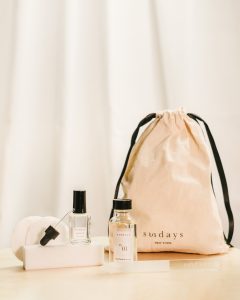
Dear Sundays formulates every polish in its collection to a 10-free standard, free from formaldehyde, DBP, TPHP, camphor, toluene, formaldehyde resin, xylene, parabens, fragrances, and animal-derived ingredients. Every shade is also vegan and cruelty-free.
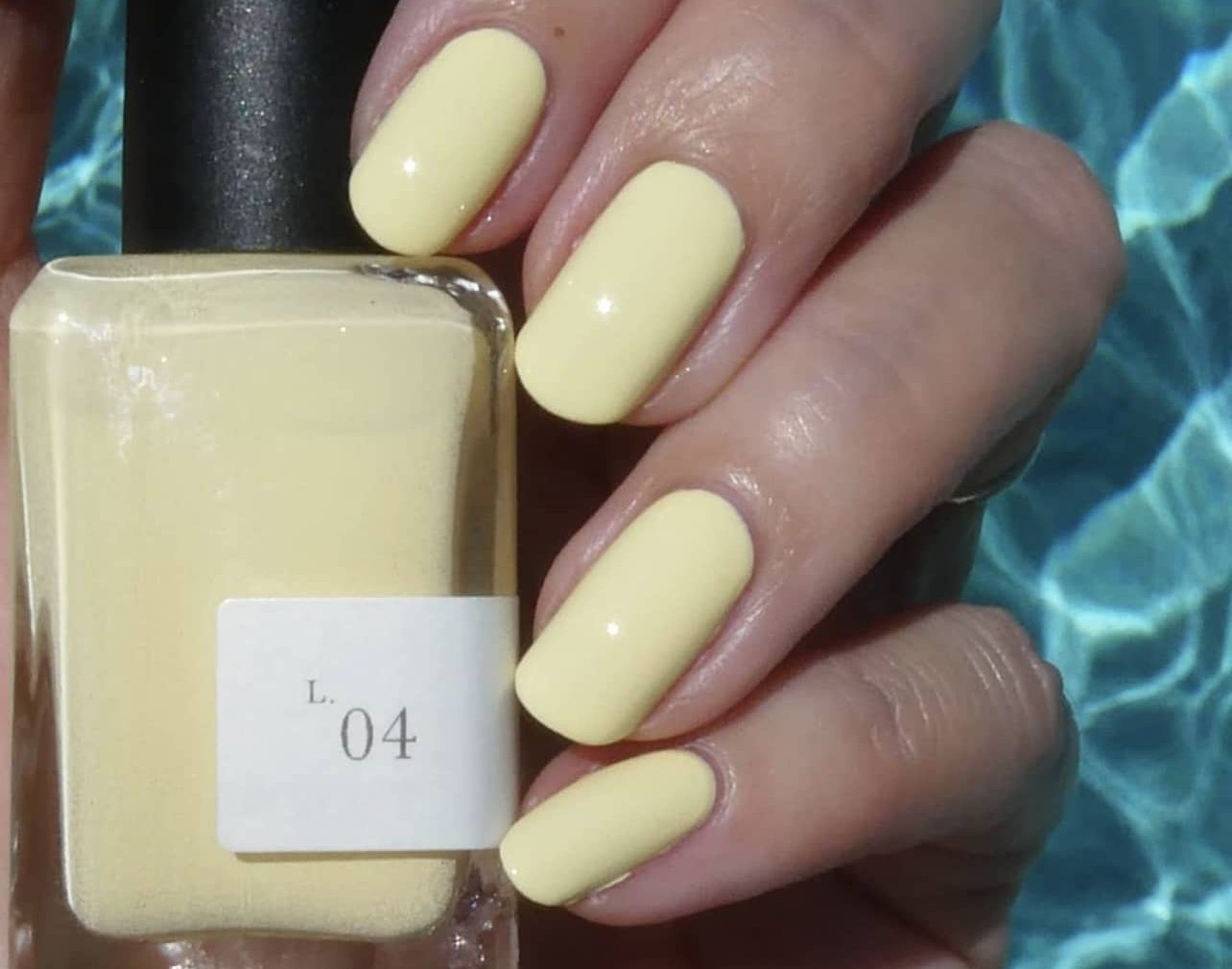
For parents who want to give their tween or teen a genuinely clean nail product, the nail polish collection covers the full color range without the ingredients that raise the most concern in developing-body research. The brand also offers softer, neutral options including a dedicated nude shades collection that works well for younger users who want polished nails without a dramatic look.
The 10-free commitment is not a marketing tier name. It is a specific exclusion list, and Dear Sundays publishes what that list includes. That transparency is the standard worth demanding from any brand you buy for a child.
Remover Matters Too: Why Acetone Is Harsh on Young Nails
Most parents focus entirely on the polish, but the remover is equally worth considering for younger users. Conventional nail polish removers are acetone-based. Acetone strips nails of their natural oils and disrupts the moisture barrier of the skin surrounding the nail. For adults, this is a temporary nuisance. For children with thinner, less resilient nails, repeated acetone exposure causes dryness, brittleness, and sometimes peeling.
The American Academy of Dermatology recommends acetone-free alternatives for people with fragile or thin nails, a category that includes most children and many teens. Pair any clean polish with the right nail care products for a fully non-toxic routine.
Soy-based and non-acetone removers dissolve polish without the same drying effect. Dear Sundays offers a soy polish remover that removes nail color without acetone or harsh solvents, making it a sensible pairing with cleaner polish for young users.
Frequently Asked Questions
Is regular nail polish safe for toddlers?
Most conventional nail polishes contain ingredients like formaldehyde, toluene, and TPHP that carry a higher concern profile for toddlers given their developing bodies and hand-to-mouth behavior. A water-based, peel-off formula is the safest choice for children under 5. If you use a solvent-based polish, choose a 10-free formula and apply in a well-ventilated space.
What age can kids start using nail polish?
There is no universal age threshold, but most pediatric guidance suggests limiting conventional nail polish for children under 5 and opting for water-based formulas for that age group. From around age 5 upward, a 10-free, vegan formula used occasionally in good ventilation is a reasonable approach. Teens can use adult nail polish regularly, and the quality of the formula they choose matters more at that stage.
Is nail polish toxic for children?
At typical use levels, nail polish is unlikely to cause acute toxicity in children. The concern is lower-level, repeated exposure to ingredients like TPHP and phthalates that are classified as endocrine disruptors. Research from bodies including the EWG and peer-reviewed journals suggests these exposures matter more during developmental windows in childhood and early adolescence than they do for adults.
What does 10-free nail polish mean, and is it actually better for kids?
10-free nail polish is formulated without ten specific categories of ingredients that appear most frequently in health-concern lists, including formaldehyde, DBP, TPHP, camphor, toluene, parabens, and animal-derived components. For children and teens, 10-free is the most protective tier available because it removes both legacy chemicals and more recently researched concerns like TPHP. It is a meaningful step beyond the standard 3-free minimum.
How do I remove nail polish safely from a child’s nails?
Use an acetone-free or soy-based remover rather than standard acetone products. Acetone strips oils and moisture from nails and surrounding skin, which is harsher on children’s thinner nails. Soy-based removers dissolve polish without the same drying effect. Apply gently with a cotton pad and moisturize the nails and cuticles afterward.
Can nail polish ingredients absorb through nails?
Yes. Research published in Environment International by Duke University scientists found that TPHP, a plasticizer used in many nail polishes, was measurably absorbed through nails during wear, with metabolites appearing in users’ urine within hours of application. This finding is one reason why knowing what is in a nail polish formula matters, particularly for children who wear it regularly.
The Bottom Line for Parents
Choosing nail polish for a child or teen does not require anxiety, but it does require a few minutes of label reading and an understanding of what the free-from tiers actually exclude.
For a genuinely clean option the whole family can use, explore the nail polish collection, formulated to a 10-free, vegan, cruelty-free standard with no compromises on color or finish.