
Your nails spend a lot of time being covered, coated, or ignored between appointments. But the health of what’s underneath all that polish matters more than most people realize. A solid natural nail care routine does not require a full product shelf or hours of effort. It just requires knowing what your nails actually need and doing it consistently.
This is not a guide about growing the longest nails or achieving the perfect at-home manicure. It is about building habits that keep your nails strong, your cuticles intact, and your hands feeling good whether or not you are wearing polish.
Why Nail Health Goes Deeper Than Aesthetics
Nails are not just decorative. They are made of keratin, the same protein as your hair, and their condition often reflects what is happening inside your body. Vertical ridges, discoloration, unusual softness, or nails that split easily can all signal nutritional gaps, dehydration, or skin conditions worth paying attention to.
Brittle nails affect an estimated 20% of the population, with women experiencing the condition more frequently than men, particularly after age 50, according to a review published in Dermatology and Therapy. Many of those cases are made worse, not better, by the products and habits people use in the name of nail care.
The cuticle is one of the most overlooked structures in nail health. It seals the space between skin and nail plate, and according to the American Academy of Dermatology, removing or cutting it creates an opening for bacteria and fungi to get in. Pushing cuticles back aggressively, trimming them down to nothing, or picking at them are habits that cause more harm than almost any other single nail care mistake.
Daily Habits That Make the Biggest Difference
Moisturize More Than You Think You Need To
Nails are porous. They absorb and release moisture throughout the day, and that cycle — especially in dry climates or heated interiors — is what leads to brittleness over time. Research on brittle nail pathogenesis has found that nails with less than 16% water content become fragile and prone to splitting.
The fix is straightforward: apply a hand cream or cuticle oil every time you wash your hands. Keep a small bottle at your kitchen sink, your desk, and in your bag. Jojoba oil, sweet almond oil, and vitamin E are all well-tolerated options that absorb quickly without leaving a greasy residue.
At Dear Sundays, their nail care collection includes cuticle oils and hydrating treatments formulated without any of the ingredients that are known to dry nails out over time. If you want to start somewhere, cuticle oil used nightly is the single highest-return addition to a basic routine.
Leave Your Cuticles Alone (Mostly)
The best cuticle care is mostly hands-off. After a warm shower, when skin is soft, you can gently push the cuticle back with a wooden stick if it has grown far onto the nail plate. That is the extent of what dermatologists recommend for most people.
Skip the cuticle nippers unless you have a trained technician handling them. Cutting live cuticle tissue opens a gateway for infection and often leads to more ragged, overgrown cuticles in the long run.
File in One Direction
Sawing back and forth across the nail tip frays the layers of keratin and leads to peeling. Filing in one direction, from the outside edge toward the center, keeps the tip clean and reduces splitting.
Use a fine-grit file rather than a coarse one. If your nails are already weak or thin, a glass file is a gentler option. It also lasts far longer than emery boards and rinses clean.
Your Weekly Natural Nail Routine
You do not need a long weekly appointment to keep your nails in good shape. A 10- to 15-minute routine once a week covers the basics.
Step 1: Soak briefly, then dry thoroughly. A short soak in warm water softens the skin around the nail and makes it easier to work with. Keep it under five minutes. Prolonged soaking actually weakens nails by over-saturating the keratin layers.
Step 2: Push back (do not cut) your cuticles. Once the skin is soft, use a rubber-tipped pusher or wooden cuticle stick. Move gently. You are nudging, not scraping.
Step 3: File and shape. Work on dry nails, not wet ones. Wet nails are softer and more prone to damage from filing. Choose your shape based on your nail length and natural growth direction.
Step 4: Buff lightly (optional). A four-sided nail buffer used occasionally can smooth surface ridges without removing too much nail plate. The keyword is occasional. Over-buffing thins the nail.
Step 5: Finish with oil. End the routine with nourishing cuticle oil massaged into the base of each nail and the surrounding skin. This step restores any moisture lost during the process and keeps the nail plate flexible.
Ingredients to Avoid in Nail Products
Some of the most common ingredients in conventional nail polish and nail hardeners have been flagged by regulatory bodies as hazardous to both skin health and systemic health. The FDA and OSHA have both published guidance on chemical hazards in nail products. The three most frequently cited are:
- Formaldehyde: Used in nail hardeners, classified as a known carcinogen. It can also cause allergic contact dermatitis and respiratory irritation with repeated exposure.
- Toluene: A solvent that gives polish its smooth application. Prolonged exposure has been linked to neurological symptoms, and it is particularly harmful during pregnancy.
- Dibutyl phthalate (DBP): A plasticizer that keeps polish flexible, banned in cosmetics across the European Union due to reproductive toxicity concerns.
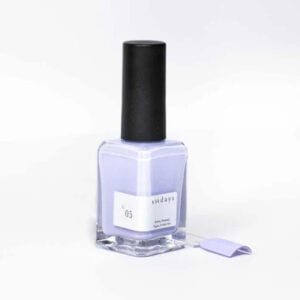
A 10-free formula, like the non-toxic nail polish at Dear Sundays, also eliminates formaldehyde resin, camphor, xylene, ethyl tosylamide, parabens, TPHP, and lead. The global clean beauty market is projected to grow from USD 12.4 billion in 2026 to nearly USD 38 billion by 2034, according to Fortune Business Insights. That growth reflects real changes in consumer expectations around ingredient transparency.
When to Take a Break from Polish
Polish is not inherently harmful to your nails, but wearing it continuously without breaks can prevent you from noticing changes in the nail plate that are worth paying attention to. Yellowing, thinning, unusual texture, or white spots are all easier to catch on bare nails.
A good rule of thumb is to go bare for at least one week for every three to four weeks of wear. During that time, stick to the weekly routine above and let the nail plate rehydrate. This is also a good window to use a strengthening treatment if your nails tend to be soft or prone to breakage.
If you are using gel or acrylics regularly, longer breaks are worth building in. Research published in PMC has documented a range of adverse outcomes associated with gel manicures, including allergic contact dermatitis, nail plate damage, and increased susceptibility to fungal infections. Alternating between gel and a clean, non-toxic nail polish formula gives your nails time to recover.
Frequently Asked Questions
How often should I apply cuticle oil?
Once a day is a realistic minimum, and twice a day is better if your hands are frequently in water or exposed to cold, dry air. Apply it at night before bed so it has time to absorb fully while you sleep.
Is it bad to push back cuticles?
Gently pushing back the cuticle after a warm shower is generally fine and is the approach most dermatologists recommend over cutting. The key word is gently. Aggressive pushing can tear the delicate skin at the base of the nail and leave you more prone to hangnails and irritation.
Can diet actually affect nail health?
Yes, and it is one of the most underrated parts of nail care. Adequate protein, iron, and zinc are all tied to nail strength and growth rate. Biotin supplementation has shown some benefit for brittle nails in published research, though results are individual. If your nails have changed noticeably without explanation, it is worth mentioning to a doctor.
How do I know if a nail product is truly non-toxic?
Look beyond marketing language and read the ingredient list. A product labeled natural has no regulated definition in the US. A 10-free or higher designation with transparent labeling is a more meaningful marker. When in doubt, checking resources like the Environmental Working Group’s Skin Deep database can help you cross-reference specific ingredients.
Ready for a Professional Reset?
A strong at-home routine makes a real difference, and pairing it with professional care takes things further. At sundays NYC nail salon, every service is built around the same principles you have been reading about: non-toxic formulas, cuticle-forward technique, and nail health as a genuine priority rather than an afterthought.
If your nails could use a reset, or you want to experience what a truly clean manicure feels like, book an appointment at sundays. With five locations across the city including NoMad, Hudson Yards, SoHo, the Upper East Side, and East Village, there is a studio close to you.