A chip on day two is not a polish problem. It is a preparation problem.
Most people reach for thicker coats or stronger topcoats when their manicure starts peeling early, but the real issue usually happened before the first drop of polish touched the nail. The steps you take in the 15 minutes before you open the bottle matter more than anything that goes on top.
This guide covers everything that actually extends wear: nail prep, application technique, daily habits, and what to avoid. None of it requires harsh chemicals, and all of it works whether you are using a clean beauty polish at home or maintaining a salon manicure.
Why Manicures Chip Faster Than They Should
Polish adhesion depends on surface chemistry. Nail plates are naturally smooth and slightly oily, which means polish has nothing to grip unless you actively create the right conditions for bonding. When you skip prep steps or rush the application, you are essentially painting on a surface that was never ready to hold anything.
Temperature also plays a role. Soaking nails in water immediately before painting causes the nail plate to expand temporarily. When it contracts again, it pulls away from the polish layer, which is one of the most common causes of early peeling. Understanding why chips happen makes every step in this process make more sense.
Nail Prep Is Where Long-Lasting Manicures Are Won
Start With Completely Clean, Dry Nails
Remove any existing polish thoroughly, then wash your hands with mild soap and allow your nails to dry completely. If you have had your hands in water for any reason, wait at least 30 minutes before painting. Fully dry nails give polish something stable to adhere to.
Avoid soaking your nails before a manicure. It feels like good prep but it actively works against adhesion.
Shape Before You Paint, Not After
File your nails before any polish goes on. Filing after the polish is applied creates micro-fractures at the nail tip that accelerate chipping. Use a fine-grit file and move in one direction rather than sawing back and forth, which weakens the nail edge.
Your chosen shape matters for wear too. Square and squoval shapes tend to hold polish longer than very sharp pointed styles because the tips absorb impact more evenly.
Remove Surface Oils
This is the step most people skip, and it is the one that makes the biggest difference. Use a small piece of cotton or a lint-free pad with a bit of non-acetone remover or rubbing alcohol and wipe each nail just before you paint. You are removing the thin layer of oil that naturally sits on every nail surface and prevents polish from bonding.
Do not touch your nails after this step. The oils from your fingertips will transfer right back.
Apply a Clean Base Coat
A quality clean base coat does two things: it protects your natural nail from staining, and it creates a surface texture that helps polish adhere. Think of it as the primer layer. Skipping it and going straight to color is one of the main reasons manicures peel as a single sheet rather than chipping gradually.
Apply one thin layer of base coat and let it dry before touching anything else. Thin is better than thick at every stage of a manicure.
Application Technique That Actually Extends Wear
Thin Coats, Fully Dried
Two thin coats of color will always outlast one thick coat. Thick coats take longer to cure and dry unevenly, which creates internal stress in the polish layer that eventually shows up as a crack or chip. Between each coat, wait until the previous layer is fully dry to the touch before adding the next one.
Cap the Free Edge
Capping the free edge means dragging your brush across the very tip of your nail with each coat, including the base coat and topcoat. This seals the edge of the nail where chips almost always start. It takes an extra second per nail and meaningfully extends wear.
Seal With a Non-Toxic Topcoat
A good topcoat does more than add shine. It creates a physical barrier between your color coat and the environment. Apply one thin layer over the color, cap the edge again, and let it dry completely before doing anything else.
Many conventional topcoats include formaldehyde, toluene, or triphenyl phosphate, which are worth avoiding whether you have sensitivities or not. Dear Sundays’ non-toxic topcoat is formulated without the common toxic ingredients while still delivering the protective layer your color needs to last.
Daily Habits That Extend Your Manicure
Wear Gloves for Cleaning and Dishes
Hot water and cleaning products are two of the fastest ways to shorten a manicure’s life. The combination of heat and chemical exposure breaks down the polish layer and causes peeling. Keep a pair of rubber or reusable gloves near the sink and use them consistently. This single habit extends average manicure wear by several days for most people.
Apply Cuticle Oil Daily
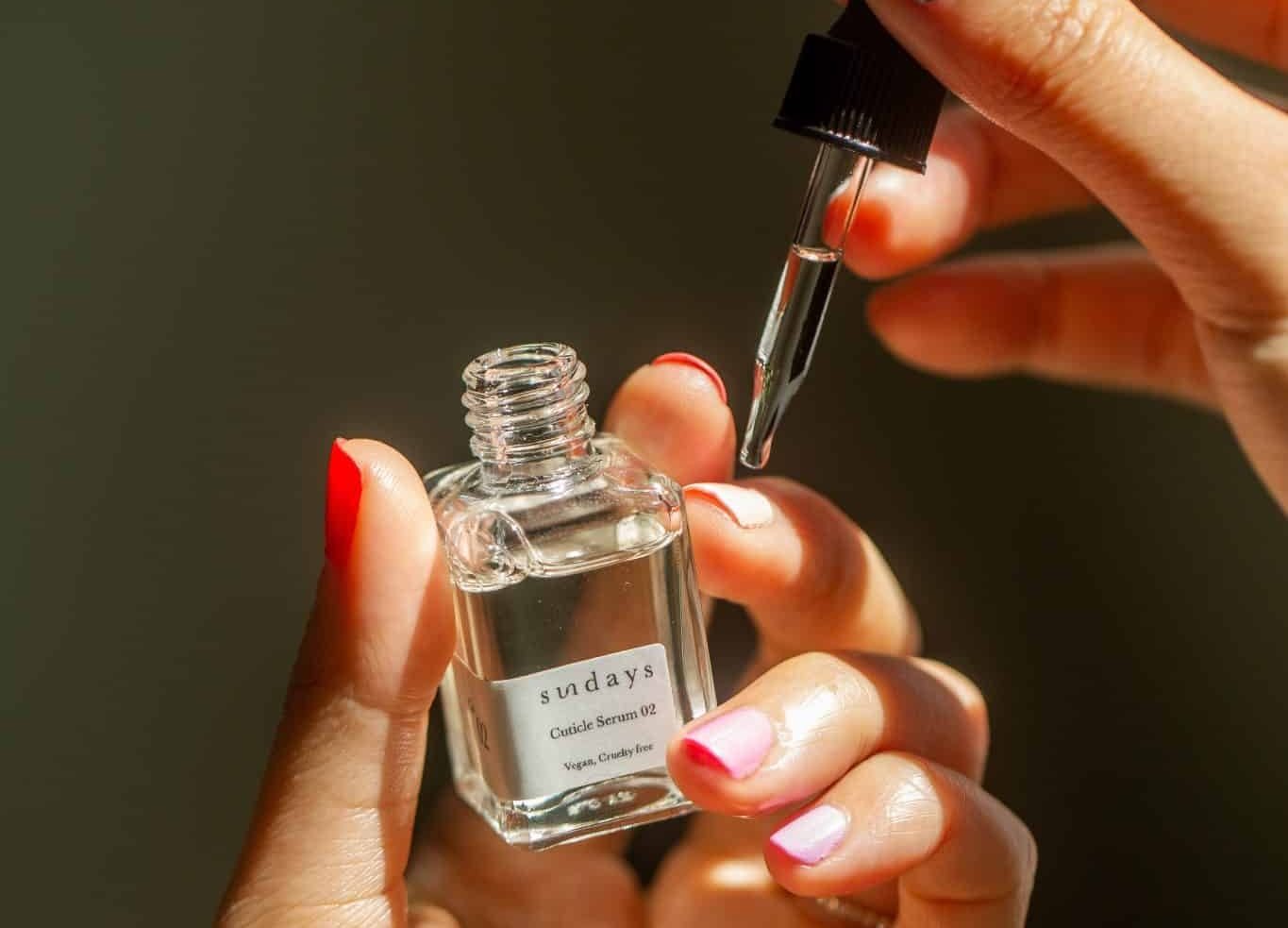
Hydrated nails and cuticles are more flexible and less prone to cracking, which reduces the stress that leads to chipping. Apply a drop of cuticle oil to each nail and massage it into the surrounding skin every day. Cuticle oil also keeps your manicure looking fresh longer because dry, ragged cuticle edges age a manicure faster than any chip.
Reapply Topcoat Every Two to Three Days
A thin layer of topcoat every two to three days refreshes the protective barrier and adds days to your overall wear time. It takes less than five minutes and requires no other steps. This is the closest thing to a maintenance shortcut that actually works.
What to Avoid If You Want Your Manicure to Last
Long hot showers directly after painting your nails are one of the fastest ways to destroy fresh polish. Wait at least an hour, ideally two, before any heat or water exposure.
Hand sanitizer gels are hard on polish, particularly the alcohol-heavy formulations. When you have a freshly painted manicure, try to use soap and water when possible, or apply sanitizer to the palm of your hand without dragging it across your nails.
Skipping the base coat to save time is always a false economy. Without it, color bonds directly to a nail surface it was not designed to adhere to, and it shows within days.
Where to Start If You Want Clean Products That Actually Work
The technique matters most, but the products you use do matter. Starting with a clean base coat, a pigmented non-toxic nail polish with good coverage, and a topcoat that does not require three coats to look finished makes the process easier and the results more consistent.
Dear Sundays offers a full range of non-toxic, vegan, cruelty-free nail products designed for both home use and professional application. Whether you are building out your at-home kit or looking for products that hold up to the demands of daily life, you can explore the full collection at dearsundays.com.
If you prefer a professional application with clean products, the sundays NYC nail salon uses the same non-toxic formulations across every service.
Frequently Asked Questions
How long should a regular nail polish manicure last with proper prep?
With thorough nail prep, thin application coats, edge capping, and a clean topcoat, a regular nail polish manicure should last seven to ten days before significant chipping occurs. Daily topcoat maintenance and gloves during cleaning can push that toward twelve days for some people.
Does a non-toxic topcoat work as well as a regular topcoat for extending wear?
Yes, when applied correctly. Clean topcoats free of formaldehyde, toluene, and other harsh solvents have improved significantly in formulation. Application technique — specifically thin layers and edge capping — matters more than the formulation choice when it comes to longevity.
Why does my nail polish peel off in sheets instead of chipping?
Sheet peeling is almost always a sign that the nail surface was not properly prepped before polish was applied. Either surface oils were not removed, a base coat was skipped, or the nails were slightly damp when painting began. Fixing your prep routine will usually resolve this completely.
Is it bad to apply topcoat over chipped polish?
Applying topcoat over a chip will not repair the chip, but it can slow further damage and extend the overall life of the manicure by a day or two. If the chip is large or near the edge, touching it up with a small amount of color before adding topcoat will give you a cleaner result.
How does cuticle oil help a manicure last longer?
Cuticle oil keeps the skin around your nails hydrated, which prevents the dry, lifting cuticle edges that make a manicure look aged and worn. It also supports nail flexibility, which reduces the micro-stress cracking that leads to chips. Apply nourishing cuticle oil daily regardless of whether you have fresh polish on.